
Sorry, nothing in cart.
Morning vs Night Skin Care Routine
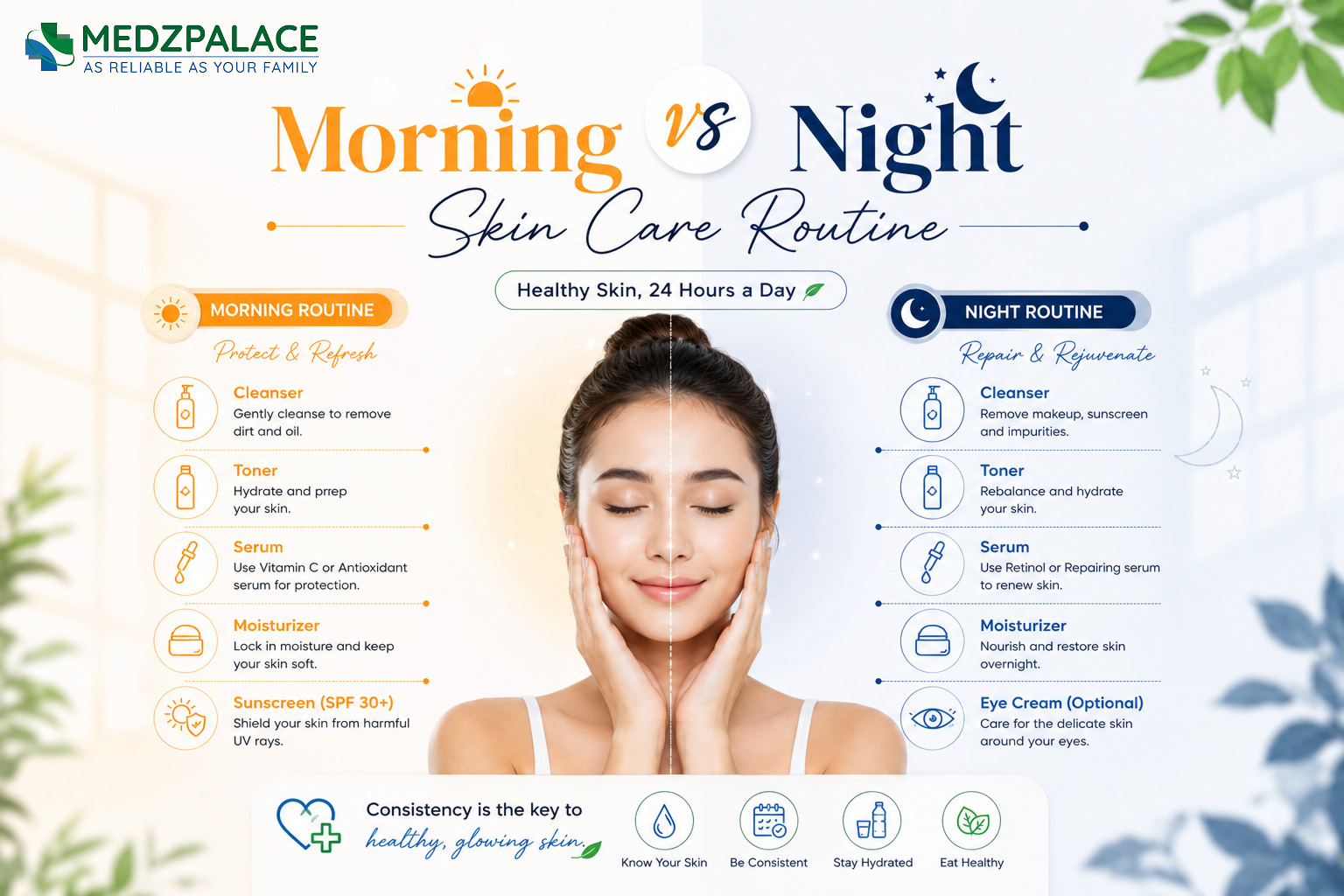
The skin, our body’s largest organ, operates on a sophisticated 24-hour cycle, a biological clock known as the circadian rhythm. This internal timing mechanism dictates that the skin’s physiological needs during the day are fundamentally different from its needs at night. Consequently, a one-size-fits-all approach to skin care is physiologically suboptimal. A strategically bifurcated skin care routine—one for the morning (AM) and one for the night (PM)—is not a marketing ploy but a clinical necessity for achieving optimal skin health. The morning routine is a shield, focused on protection and prevention, while the evening routine is a workshop, dedicated to repair and regeneration.
The Science of Skin’s Circadian Rhythm
Understanding why two distinct routines are necessary requires a brief dive into the chronobiology of the skin. During daylight hours, the skin is in a defensive state. Its primary functions are to combat environmental aggressors such as ultraviolet (UV) radiation, pollution, and oxidative stress. Conversely, at night, the skin shifts into a regenerative phase. Freed from its daytime defensive duties, it focuses on repairing accumulated damage, rebuilding its structural components, and replenishing its resources.
Key Diurnal vs. Nocturnal Skin Functions:
- Cell Proliferation and Repair: The rate of keratinocyte (skin cell) proliferation and DNA repair peaks at night, typically between 11 PM and 4 AM. This is the optimal window for cellular turnover and healing.
- Transepidermal Water Loss (TEWL): TEWL, the process of water evaporating from the skin’s surface, is significantly higher during the night. This makes the skin more permeable and receptive to active ingredients but also more prone to dehydration if not properly supported.
- Sebum Production: Sebaceous gland activity is highest around midday, leading to increased oiliness. It troughs during the night.
- Blood Flow and Temperature: Cutaneous blood flow and skin temperature increase in the evening, which enhances the absorption of topically applied products.
Leveraging this knowledge allows for the targeted delivery of ingredients when the skin is most receptive, maximizing efficacy and promoting long-term dermal and epidermal health.
The Morning (AM) Skin Care Routine: A Shield of Protection
The primary objective of the AM routine is to fortify the skin’s barrier and provide comprehensive protection against the environmental onslaught it will face throughout the day. The core philosophy is defense.
Step-by-Step Breakdown of a Clinical AM Routine
Step 1: Gentle Cleansing
Overnight, the skin accumulates sebum, sweat, and residual products from the previous night’s routine. A gentle, hydrating cleanser is essential to remove this buildup without stripping the skin’s natural lipid barrier, which is crucial for its protective function. Aggressive cleansers can compromise this barrier, leading to increased sensitivity and dehydration.
- Recommended Cleansers: Cream, milk, or non-foaming gel cleansers containing ingredients like glycerin, ceramides, or hyaluronic acid.
- Clinical Rationale: Preserves the acid mantle and stratum corneum integrity, preparing the skin as a clean canvas for subsequent protective layers.
Step 2: Antioxidant Serum
This is arguably the most critical protective step after sunscreen. Antioxidants are molecules that neutralize free radicals—unstable atoms generated by UV radiation and pollution that cause cellular damage, collagen degradation, and hyperpigmentation. A well-formulated antioxidant serum acts as a secondary line of defense against this oxidative stress.
- Gold Standard Ingredient: Vitamin C (L-Ascorbic Acid) at a concentration of 10-20%. It not only scavenges free radicals but also plays a vital role in collagen synthesis and inhibits tyrosinase, the enzyme responsible for melanin production.
- Synergistic Ingredients: Vitamin E (Tocopherol) and Ferulic Acid are often combined with Vitamin C to enhance its stability and photoprotective capabilities, a combination shown to provide significantly more protection than Vitamin C alone.
Step 3: Hydration (Moisturizer)
A daytime moisturizer serves two primary functions: to hydrate the epidermis and to lock in the previously applied serum. A well-hydrated skin barrier is stronger and more resilient to environmental damage. For daytime use, a lighter, non-comedogenic formulation is typically preferred to avoid a heavy or greasy feel under makeup or sunscreen.
- Key Ingredients: Look for humectants like Hyaluronic Acid and Glycerin to draw water into the skin, and barrier-supporting ingredients like Ceramides and Niacinamide.
Step 4: Broad-Spectrum Sun Protection (The Non-Negotiable)
This is the single most important step in any morning skin care routine for preventing photoaging and skin cancer. Sunscreen protects the skin from both UVA (aging) and UVB (burning) rays.
- Minimum SPF: SPF 30, though SPF 50 is often recommended by dermatologists for superior protection.
- Broad-Spectrum: This designation is crucial, as it ensures protection against both UVA and UVB wavelengths.
- Types of Sunscreen:
- Mineral (Physical): Contains zinc oxide and/or titanium dioxide. These ingredients sit on the skin’s surface and physically block or reflect UV rays. They are generally well-tolerated by sensitive skin.
- Chemical: Contains organic compounds (e.g., avobenzone, oxybenzone, octinoxate) that absorb UV radiation and convert it into heat, which is then released from the skin.
- Application: Apply liberally 15-20 minutes before sun exposure and reapply at least every two hours, or more frequently if swimming or sweating.
The Night (PM) Skin Care Routine: The Power of Repair and Rejuvenation
The PM routine is designed to work in synergy with the skin’s natural nocturnal repair cycle. The focus shifts from protection to active treatment and deep nourishment, addressing concerns such as photoaging, acne, and hyperpigmentation.
Step-by-Step Breakdown of a Clinical PM Routine
Step 1: Double Cleansing
A single cleanse is often insufficient to remove the day’s accumulation of sunscreen, makeup, sebum, and environmental pollutants. The double cleansing method ensures a thoroughly clean surface, which is critical for the effective penetration of treatment products.
- First Cleanse (Oil-Based): An oil, balm, or micellar water is used to dissolve and break down lipophilic (oil-soluble) substances like makeup and SPF. Massage onto dry skin, then emulsify with water and rinse.
- Second Cleanse (Water-Based): A traditional gel, cream, or foam cleanser is used on damp skin to remove any remaining residue and deeply cleanse the pores.
Step 2: Exfoliation (Used 2-3 Times Weekly)
Exfoliation accelerates the desquamation process (shedding of dead skin cells), preventing clogged pores, improving skin texture, and enhancing the penetration of other active ingredients. Chemical exfoliants are generally preferred over physical scrubs, which can cause micro-tears in the skin.
- Alpha-Hydroxy Acids (AHAs): Water-soluble acids like Glycolic Acid and Lactic Acid work on the skin’s surface to dissolve the bonds holding dead cells together. They are excellent for improving texture, radiance, and treating hyperpigmentation.
- Beta-Hydroxy Acids (BHAs): Oil-soluble Salicylic Acid is able to penetrate into the pores to exfoliate from within, making it the gold standard for treating comedonal acne and congestion.
Step 3: Treatment Serums (Actives)
This is the core treatment phase of the PM routine, where potent, targeted ingredients are applied to address specific skin concerns while the skin is in its peak repair mode.
- Retinoids (Vitamin A derivatives): This is the most well-researched and clinically proven ingredient for anti-aging. Retinoids (including retinol, retinaldehyde, and prescription tretinoin) work by binding to retinoic acid receptors in the skin cells, which accelerates cell turnover, stimulates collagen and elastin synthesis, reduces hyperpigmentation, and regulates sebum production. They should be introduced gradually to mitigate potential irritation.
- Peptides: These are short chains of amino acids that act as signaling molecules, instructing the skin to perform specific functions like building more collagen (e.g., Matrixyl 3000) or relaxing facial muscles (e.g., Argireline).
- Niacinamide (Vitamin B3): A versatile ingredient that strengthens the skin barrier, reduces inflammation and redness, minimizes the appearance of pores, and regulates oil production. It pairs well with most other actives, including retinoids.
Step 4: Eye Cream
The periorbital skin is thinner and more delicate than the rest of the face, making it one of the first areas to show signs of aging. A dedicated eye cream can deliver targeted ingredients to address concerns like fine lines (retinol, peptides), dark circles (Vitamin C, niacinamide), and puffiness (caffeine).
Step 5: Richer Moisturizer/Occlusive
As TEWL is highest at night, a more robust, emollient-rich moisturizer is necessary to lock in moisture, support the skin barrier, and seal in the active ingredients from the treatment steps. This creates a nourishing, healing environment for the skin while you sleep.
- Key Ingredients: Look for a higher concentration of ceramides, cholesterol, fatty acids, shea butter, or squalane. In very dry climates or for compromised barriers, a thin layer of an occlusive like petrolatum can be applied as a final step (a technique known as “slugging”).
Key Differences Summarized: A Comparative Table
| Feature | Morning (AM) Routine | Night (PM) Routine |
|---|---|---|
| Primary Goal | Protection (from UV, pollution, oxidative stress) | Repair, Regeneration, and Treatment |
| Cleansing | Gentle, single cleanse | Thorough double cleanse to remove makeup/SPF |
| Key Active Ingredients | Antioxidants (Vitamin C, Vitamin E, Ferulic Acid) | Retinoids, Chemical Exfoliants (AHAs/BHAs), Peptides |
| Moisturizer Texture | Lighter, non-comedogenic, often with SPF | Richer, more emollient, and occlusive |
| Non-Negotiable Step | Broad-Spectrum Sunscreen (SPF 30+) | Thorough Cleansing and Application of Treatment Products |
Frequently Asked Clinical Questions (FAQs)
Do I really need to wash my face in the morning if I cleansed at night?
Yes. While you sleep, your skin secretes sebum and sheds dead cells. Furthermore, bacteria can transfer from your pillowcase. A gentle morning cleanse removes this buildup, prevents pore congestion, and ensures that your daytime products (especially sunscreen) can be applied evenly and effectively.
Can I use my night cream during the day?
While possible, it is not ideal. Night creams are typically heavier and more occlusive to combat nocturnal TEWL. Used during the day, they can feel greasy, interfere with makeup application, and may lack critical daytime components like SPF. Conversely, a day cream may not be sufficiently nourishing for nighttime repair.
Is it safe to use Vitamin C and Retinol together?
It is not recommended to layer them in the same application (e.g., both at night), as this can increase the potential for irritation and may affect the stability of the ingredients. The best clinical practice is to separate them: use Vitamin C in the morning for its antioxidant and photoprotective benefits, and use Retinol at night for its regenerative properties. This strategy allows each ingredient to work optimally without conflict.
How long should I wait between applying different skin care products?
While there is no universally mandated waiting time, a good rule of thumb is to wait until a product is mostly absorbed before applying the next. This typically takes 30-60 seconds. For potent active ingredients like retinoids or prescription treatments, some dermatologists recommend waiting 15-20 minutes after cleansing to ensure the skin is completely dry, which minimizes the risk of irritation.
Medical Disclaimer: The information provided in this article is for educational and informational purposes only and does not constitute providing medical advice or professional services. The information provided should not be used for diagnosing or treating a health problem or disease, and those seeking personal medical advice should consult with a licensed physician or other qualified health care professional.